
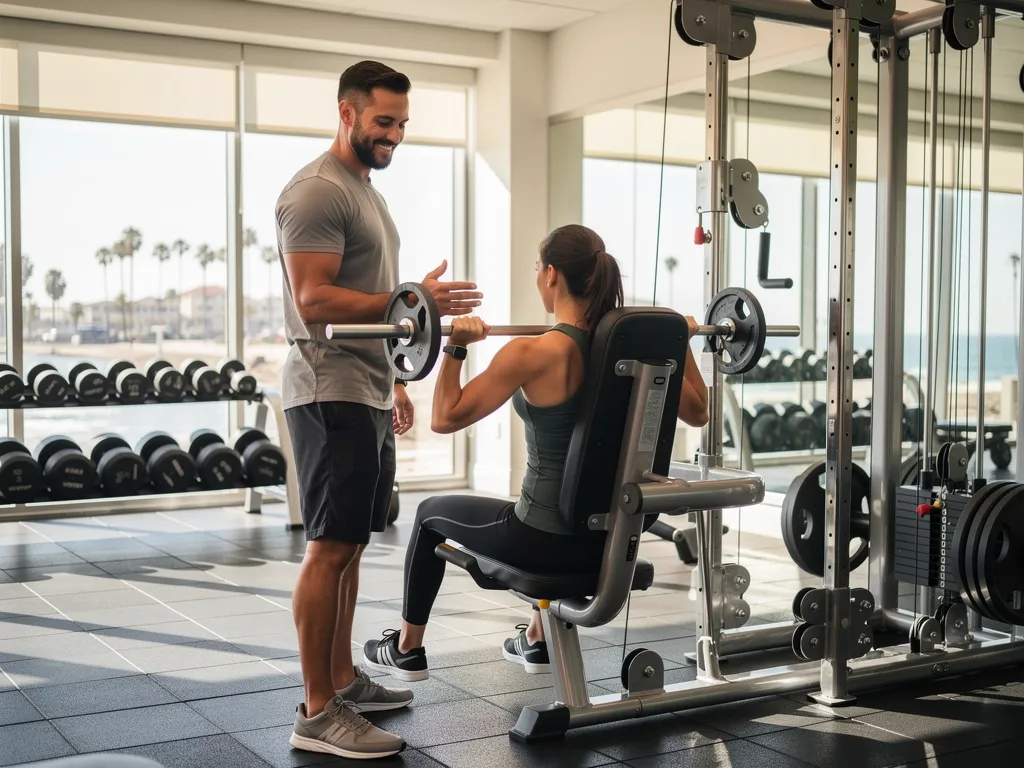
Strength training for beginners in San Diego starts with two or three full-body sessions weekly, light weights, and perfect form. Iron Orr Fitness recommends building flexibility and core strength first. At Iron Orr Fitness, we offer muscle gaining, weight loss, and muscle toning personal trainer services in the San Diego area. Each and every one of our core services also provides nutritional guidance, expert health and workout recommendations, and more.
What do you need before starting strength training?
A beginner’s strength training journey demands preparation, not just enthusiasm. Strength Training Techniques for Beginners San Diego start with a clear, safe plan: two or three full-body sessions per week using light weights and perfect form. Skipping this foundation invites setbacks. Joint strain and discouragement replace progress when new lifters rush into heavy loads without the right groundwork.
What physical foundation should a beginner build first?
Flexibility, tendon strength, and core stability come before adding significant weight. A San Diego trainer’s approach, grounded in Tudor Bompa’s five basic laws, prioritizes these elements. The body adapts to stress gradually. Neglecting this sequence increases injury risk and stalls long-term muscle development.
How does professional guidance change the starting point?
Expert coaching transforms a confusing process into a structured path. At Iron Orr Fitness, our certified trainers deliver customized workout plans, nutrition coaching, and proven strategies to help you achieve lasting results. This expertise catches harmful movement compensations early. Preparation checklist for new lifters:
- Schedule two or three non-consecutive training days each week.
- At Iron Orr Fitness, we offer muscle gaining, weight loss, and muscle toning personal training services in the San Diego area.
- Master bodyweight squats, hinges, and planks before loading.
- Identify a qualified coach to assess posture and movement patterns.
Which compound movements should beginners master first?
Beginners build the fastest strength by mastering a handful of compound movements. These multi-joint exercises recruit large muscle groups, mimic real-world actions, and create the neurological adaptations that drive early progress. Skipping them delays results and increases injury risk.
Why do compound exercises matter more than isolation moves for new lifters?
Compound lifts deliver superior efficiency. A single squat session activates the quads, hamstrings, glutes, and core simultaneously. Isolation moves like leg extensions target one muscle at a time. For a San Diego beginner with limited training hours, compounds produce more strength per minute. Functional strength training involves simple everyday actions that build strength and enhance balance, according to Scripps AMG. Squatting, pressing, and hinging translate directly to lifting groceries, climbing stairs, or paddling a surfboard at La Jolla Shores.
What are the first five compound movements a beginner should learn?
New lifters in San Diego gyms should sequence these five foundational patterns. Each one teaches a critical motor skill that transfers to more advanced lifts later.
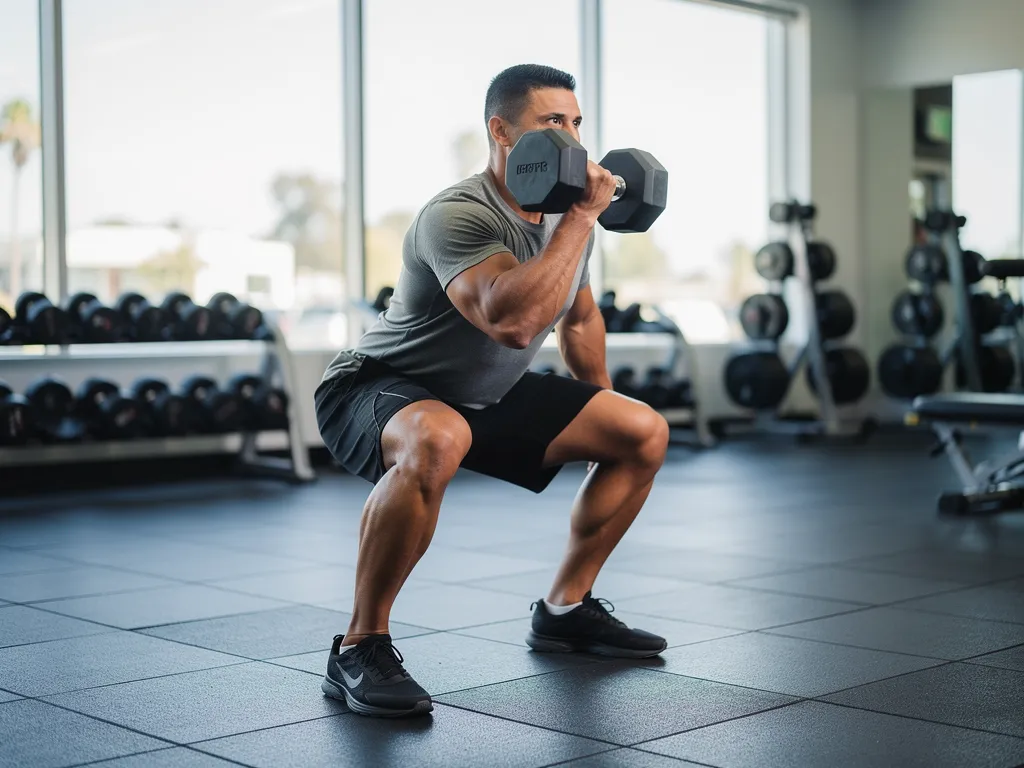
- Goblet Squat
Hold a single dumbbell or kettlebell against the chest. Descend until the elbows touch the inside of the knees. This movement teaches upright torso positioning and full depth without spinal loading. Master the goblet squat before touching a barbell.
- Trap Bar Deadlift
Step inside the hexagonal bar and grip the handles at the sides. The trap bar shifts the load closer to the body’s center of mass. Beginners learn the hip hinge pattern with far less lower-back stress than a conventional deadlift.
- Dumbbell Bench Press
Lie flat on a bench with a dumbbell in each hand. Lower the weights until the elbows reach bench level, then press up. Dumbbells allow each arm to move independently. This exposes and corrects side-to-side strength imbalances early.
- Chest-Supported Row
Set an incline bench to 45 degrees and lie face-down. Row dumbbells toward the hips while keeping the chest pressed into the pad. The support eliminates momentum and protects the lower back. Rows build the posterior shoulder and upper back strength that counters the forward-rounded posture of desk work.
- Farmer’s Carry
Pick up a heavy dumbbell in each hand and walk 30 to 50 yards with perfect posture. This loaded carry builds grip strength, core stability, and full-body tension. It is the simplest compound movement and one of the most transferable to daily life.
How does a trainer prevent injury during compound lifts?
Proper coaching catches problems before they become injuries. Iron Orr Fitness trainers constantly assess a client’s kinetic chain to prevent imbalances and compensations that later turn into injuries. The company’s programming compensates for pre-existing conditions or previously incurred injuries. This approach stems directly from founder Justin’s experience of getting hurt training for the Olympics in 2002. Every squat depth, row angle, and carry distance adjusts to the individual’s current mobility and injury history. Beginners in San Diego who train under this model build strength training techniques for beginners without the setbacks that derail solo efforts.
How do you apply progressive overload safely?
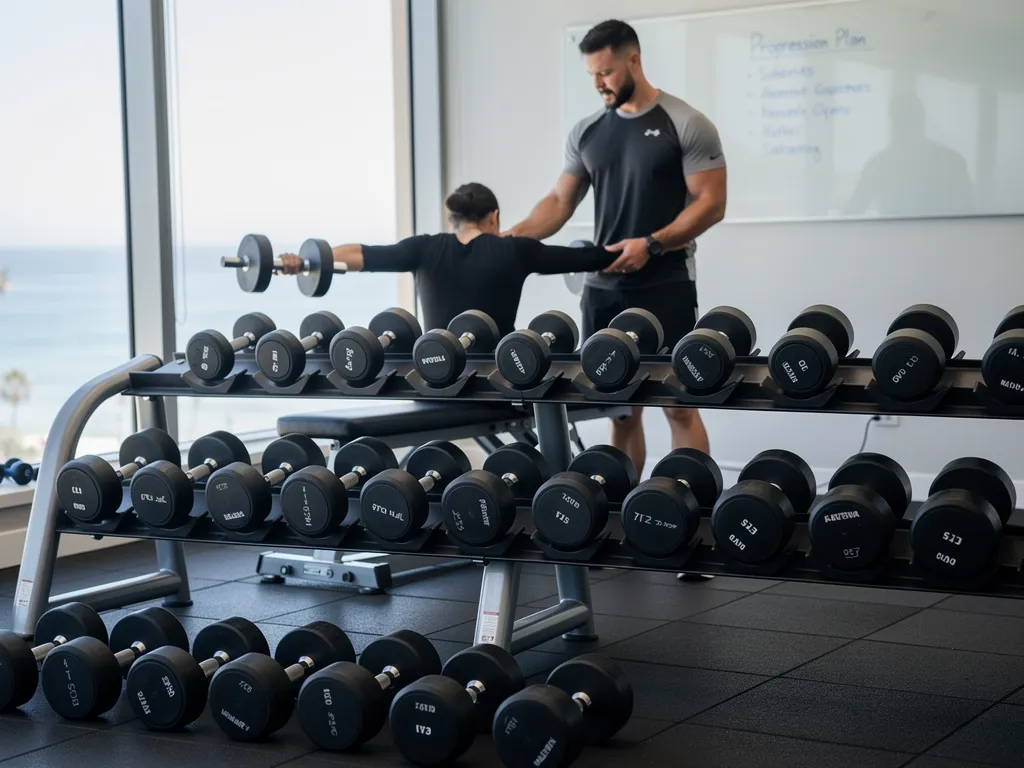
Progressive overload means adding small, steady increases in weight only after form and core strength are solid. Rushing the load before the foundation is set invites joint strain and stalled progress. Strength Training Techniques for Beginners San Diego start with two or three full-body sessions weekly, light weights, and perfect form.
What should a beginner master before adding weight?
A beginner builds flexibility, tendon strength, and core stability first. These three qualities protect the kinetic chain when load increases later. Skipping this phase turns a simple progression into a recurring injury cycle.
How much weight should be added each week?
Add the smallest increment available, typically 2.5 to 5 pounds for upper-body lifts. Lower-body movements tolerate slightly larger jumps. The goal is completing every rep with clean technique before the next increase.
Follow this sequence for safe progression:
- Perform the movement with light weight for two or three sessions.
- Confirm every rep matches the target tempo and range of motion.
- Add the smallest plate increment on the next session.
- Repeat the process only when all prescribed reps stay clean.
Claim your Complimentary, No-Obligation Body Composition Exam with San Diego’s top 1-on-1 Personal Trainer. Gaining muscle is a science involving proper training and nutrition, not just effort. Clients who chase load without assessment lose months to setbacks that proper programming prevents.
What does a beginner’s weekly schedule look like?
A beginner’s weekly schedule includes two or three full-body sessions, with rest days between each workout. This frequency builds strength without overwhelming joints, tendons, or a nervous system still learning new movement patterns.
Consistency matters more than intensity during the first eight weeks. Skipping sessions stalls progress and leaves beginners vulnerable to the frustration that ends most fitness journeys before results appear.
How many rest days should a beginner take?
Rest days are non-negotiable. A Monday-Wednesday-Friday schedule gives muscles 48 hours to recover between sessions. Beginners who train on consecutive days risk joint pain and stalled strength gains.
What does a sample week look like?
- Monday: Full-body strength session focusing on form with light weights.
- Tuesday: Rest or light walking along Mission Bay.
- Wednesday: Full-body session with small, steady increases in load.
- Thursday: Rest or gentle mobility work.
- Friday: Full-body session reviewing technique from the week.
- Saturday: Active recovery, such as a flat hike at Torrey Pines.
- Sunday: Complete rest.
Iron Orr Fitness serves clients across UTC, La Jolla, Carmel Valley, and Del Mar with NASM-certified trainers. The company’s two UTC locations provide no-membership-fee gym access and complimentary classes. Trainers design personalized lifestyle systems for each client, adjusting the weekly schedule around work demands, prior injuries, and recovery capacity.
How do you avoid common beginner mistakes?
Avoiding common beginner mistakes starts with mastering form before chasing heavier weights. Strength training techniques for beginners in San Diego demand patience, precision, and a willingness to build foundational stability first.
Beginners who skip this step risk setbacks that derail progress for weeks or months. The cost of rushing is not just stalled gains. It is joint pain, muscle imbalances, and the frustration that causes many new lifters to quit entirely.
What is the biggest mistake beginners make in the gym?
The biggest mistake is prioritizing load over technique. A San Diego trainer’s guide emphasizes starting with two or three full-body sessions weekly using light weights and perfect form. Building flexibility, tendon strength, and core stability creates the platform for safe progression. Without that platform, every added pound multiplies injury risk.
How can a trainer help prevent workout injuries?
A qualified trainer spots compensations before they become injuries. Iron Orr Fitness was founded specifically so clients could reach physical goals without getting hurt. Trainers continuously assess each client’s kinetic chain, watching for imbalances and adjusting programming to accommodate pre-existing conditions. This vigilance keeps beginners training consistently instead of sidelined.
Common pitfalls also extend beyond the gym floor. Nutritional missteps sabotage results just as quickly as poor form. The company’s system addresses every weight loss challenge clients face, eliminating yo-yo dieting through proven, sustainable methods. Beginners who pair smart training with structured nutrition avoid the cycle of losing and regaining the same 10 pounds.
A practical starting point for any San Diego resident is a professional assessment. Iron Orr Fitness offers a complimentary, no-obligation body composition exam. This baseline measurement reveals exactly where a beginner stands, making it possible to track real progress from day one rather than guessing.
FAQ
How many strength training sessions should a beginner do each week?
Two or three full-body sessions weekly with light weights and perfect form. Non-consecutive training days are recommended to allow proper recovery and adaptation.
What should a beginner master before adding significant weight?
Flexibility, tendon strength, and core stability come first. Bodyweight squats, hinges, and planks should be mastered before loading any weight.
What kind of guidance does Iron Orr Fitness provide for beginners?
Certified trainers deliver customized workout plans, nutrition coaching, and proven strategies. Services include muscle gaining, weight loss, and muscle toning personal training in San Diego.
Conclusion
The path to lasting strength starts with patience, precision, and a professional assessment of where you stand today. Master the fundamentals, respect recovery, and let small, consistent increments build your foundation. Your next step is booking that complimentary body composition exam to establish your baseline and begin a program designed around your unique body, schedule, and goals.